





San Francisco’s underground infrastructure sits on some of the most unstable ground in the country. Large portions of the city were built on filled marshland and reclaimed bay areas, and decades of seismic activity have left the collection system beneath those neighborhoods in a state few engineers elsewhere have to navigate.
For engineers and contractors managing sewer rehabilitation across San Francisco, inflow and infiltration (I&I) has remained central to the SFPUC’s long-term Sewer System Improvement Program. Recent atmospheric river events and ongoing seismic monitoring have continued to test a wastewater collection system built on ground that was never entirely solid to begin with.
Two Sources, One Unstable Foundation
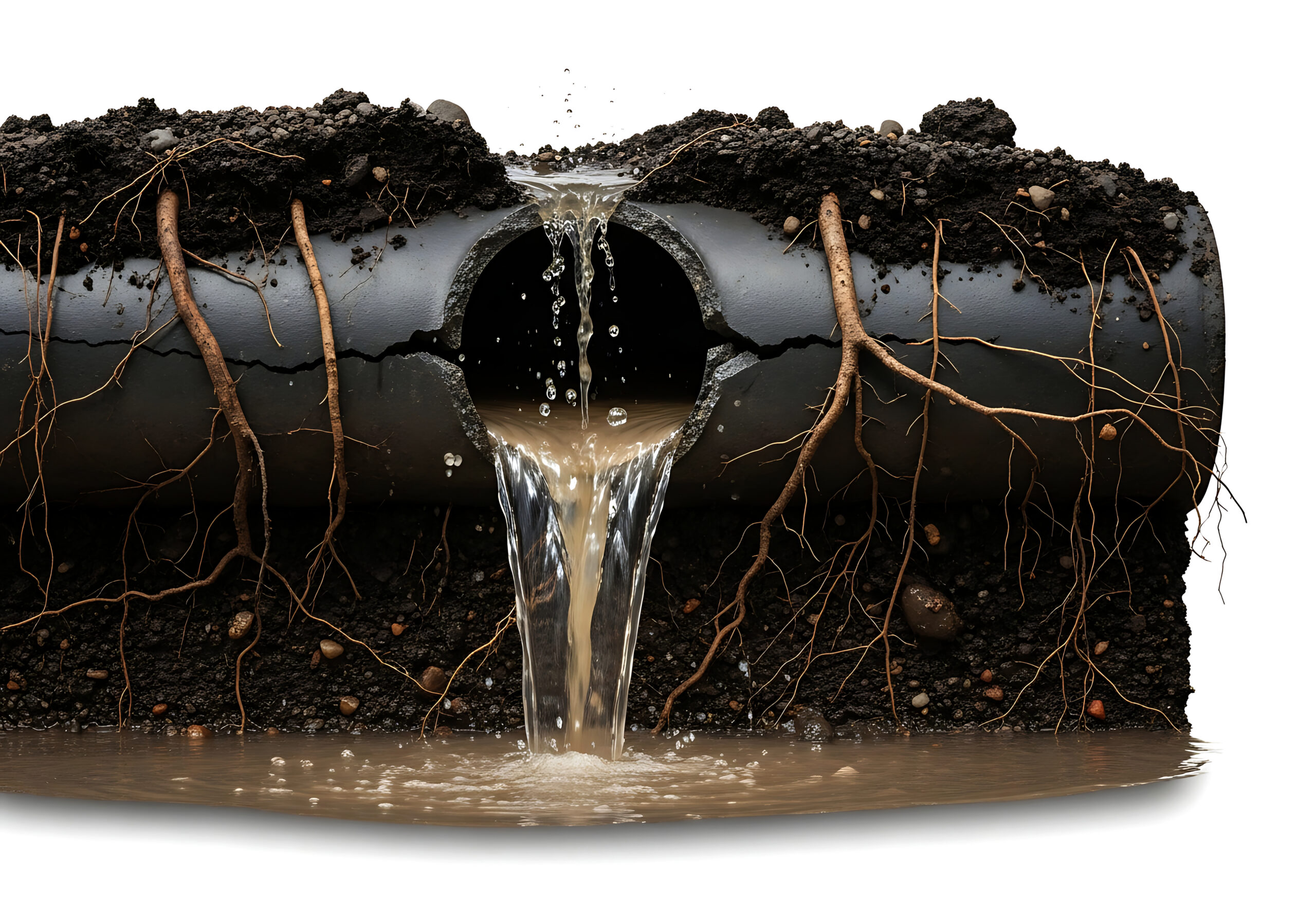
Groundwater infiltration in San Francisco occurs when cracked or broken pipes, leaking pipe joints, and deteriorated manholes let water seep into the sanitary sewer system, a problem made worse by liquefaction-prone fill soils across the Marina and SoMa districts. Sewer inflow takes a more direct path, entering through roof drains, yard drains, and other surface connections tied straight into the line.
Both draw down sewer capacity fast in a city where the ground itself keeps shifting underneath the pipes. San Francisco’s combined sewer system routes stormwater and sewage through the same aging network in older neighborhoods, and a wastewater collection system already carrying excess flow has little margin left once an atmospheric river dumps inches of rain in a day.
Why Seismic Fill Complicates the Fix
San Francisco contractors rely on cured-in-place pipe (CIPP) to renew deteriorated sewer mains without tearing up narrow, hillside streets in neighborhoods like North Beach and the Mission, and the trunk line typically holds up well once the process is complete. What sits beneath the fill areas built over a century ago is a different matter entirely.
San Francisco’s reclaimed bay fill settles unevenly over time and shifts further with every seismic event, stressing laterals, connections, and manholes independently of whatever happened at the mainline. A sewer main lined but infiltration persists is a pattern engineers see constantly here, since the fill keeps settling long after the CIPP crew has moved on to the next block.
Common infiltration sources across San Francisco include:
- Deteriorated laterals beneath older Marina and SoMa fill-district properties
- Failed main-to-lateral connections stressed by liquefaction-prone soil settlement
- Cracked host pipes weakened by ongoing seismic micro-movement across fault-adjacent zones
- Manhole joint failures allowing groundwater intrusion near bay-adjacent and waterfront corridors
- Root intrusion in sewer pipes throughout the city’s older hillside residential districts
Reading Ground That Won’t Hold Still
Fill soils and seismic activity behave so differently block to block in San Francisco that a single inspection pass frequently misses where the actual problem lives. Combining CCTV inspection and flow monitoring for I&I with smoke testing and flow monitoring for source identification is the only reliable way to isolate the main, the lateral, the connection, or the structure as the true source.
Once isolated, the fix follows the defect: mainline CIPP for structural trunk-line deterioration, cured-in-place pipe lateral lining for a compromised service line, main-to-lateral connection rehabilitation where fill settlement has separated a joint, manhole rehabilitation for a structure cracked by seismic pressure, and injection grouting for a small, active, localized leak.
Why This Matters for Municipal Sewer Budgets
The SFPUC continues working under its Sewer System Improvement Program to control the cost of pumping and treating unwanted groundwater across a service area shaped by decades of seismic risk and unstable fill. Sewer overflows during heavy rain carry real regulatory consequences in a region working to protect San Francisco Bay water quality.
Wastewater utility capacity management here depends on treating the network as one connected system, not a series of isolated fill-district repairs. Specifying CIPP for municipal sewer projects handles the mainline, but rehabilitating public and private sewer laterals, connections, and manholes alongside it is what actually reduces wet-weather flows across a city this exposed to unstable ground and seismic activity.
The ground beneath San Francisco isn’t going to stop shifting, so protecting the infrastructure investment means treating mains, laterals, connections, and manholes as one ongoing commitment.
Find a WRT-certified installer serving San Francisco to assess your collection system’s full scope of I&I sources.